
Key takeaways
- Core X has 10 exercises that train the front, back and sides of your core.
- The routine takes about five minutes. The final exercise, Rockies, is three sets of three with rest between sets.
- Keep your hips up in the planks, control the pace of your leg lifts, and do both sides.
- Adult runners can use Core X after workout days and long runs.
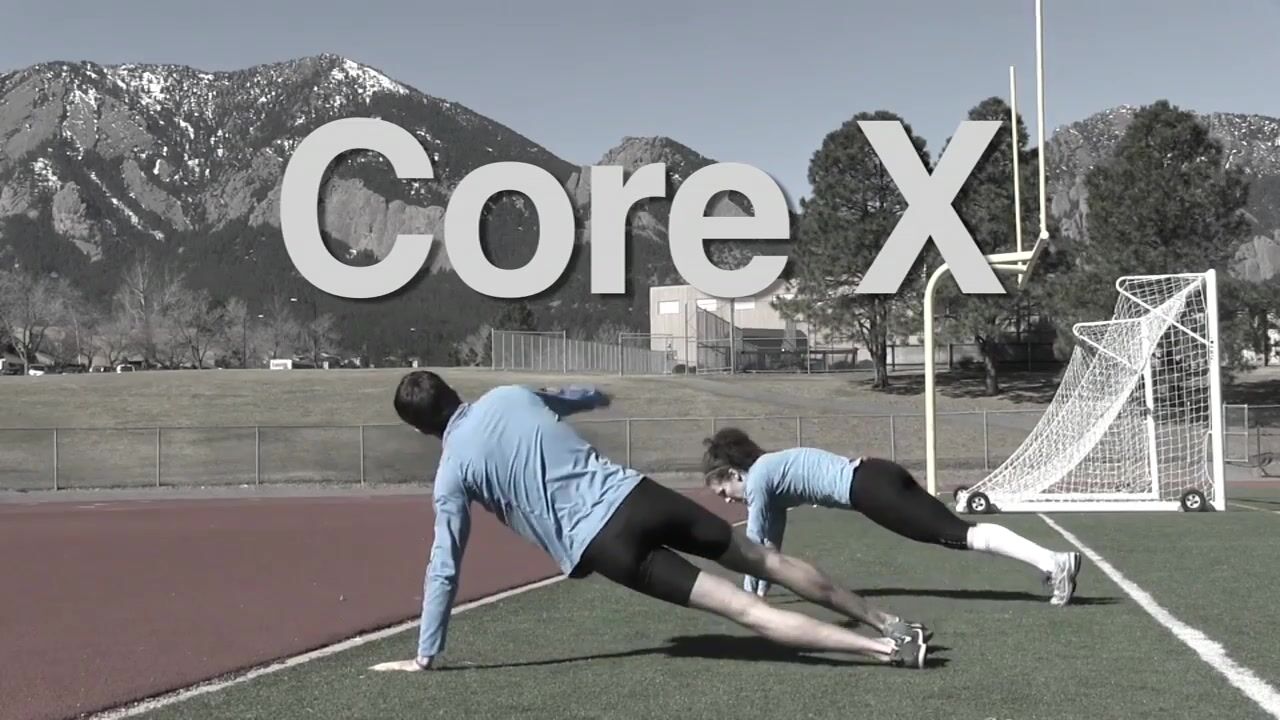
Core X is a short core routine you can do after your run. It has 10 exercises, with work for both the front and back of your body. Watch Macklin and Nikki demonstrate the routine, then use the notes below to check your form.
Why Core Strength Matters for Runners
Your core links your upper and lower body and helps you maintain your running posture. Core X gives you a simple way to include core work in your training.
The routine targets both the anterior chain (front of the body) and the posterior chain (back of the body). You train both in the same routine.
Core X Routine Overview
In the video, I introduce Core X as 10 exercises at 30 seconds each - about five minutes. For the final exercise, Rockies, I give a different instruction: three sets of three, with rest between sets. Follow that instruction rather than rushing to finish in exactly five minutes. Macklin and Nikki demonstrate each exercise.
1. Running V-Sits
The first exercise is the running V-sit. The goal is to hold a V-sit while you pump your arms as fast as you can. Macklin demonstrates excellent form by keeping a sharp V angle and moving his arms intensely.
For many, achieving the perfect V shape might be challenging at first - you may find yourself a bit flatter or leaning back more. That’s perfectly fine. The key is to engage your core and move your arms rapidly while maintaining as much of the V posture as possible.
2. Australian Crawl
Next is the Australian crawl, a simple exercise that resembles swimming on your stomach. Here you move your arms and legs simultaneously, engaging your entire posterior chain - the muscles along your back, including your lower back, glutes, and hamstrings. These muscles are often undertrained compared to the anterior chain, so this exercise helps balance your core strength.
By mimicking swimming motions, the Australian crawl activates your back muscles and improves coordination between your limbs.
3. V-Sit Flutter Kicks
Following the crawl, you’ll perform flutter kicks while holding the V-sit position. In this exercise, your arms remain still, but your legs move up and down rapidly in a fluttering motion. This is a challenging exercise that targets your lower abdominal muscles and hip flexors.
While Macklin and Nikki make it look easy, beginners might find themselves leaning back more or having a flatter V angle. That’s normal - focus on maintaining core engagement and gradually increasing your endurance with practice.
4. Side Plank with Leg Lifts
Next is the side plank with leg lifts. This move targets your obliques and hip abductors, which are crucial for lateral stability in running. Holding a side plank position, you lift your top leg slowly and steadily for the entire 30 seconds.
One important tip is to perform the leg lifts at a slow, controlled pace rather than rushing through them. Slow movements increase time under tension, making the exercise more effective and challenging. Macklin and Nikki demonstrate great posture, showing how to keep your body aligned and hips lifted.
5. Supine Plank with Leg Lifts
The fifth exercise is a supine plank with leg lifts. Lying on your back, you lift one leg at a time while maintaining a straight line from your heels to your shoulders. This exercise activates your glutes, hamstrings, and lower abs.
Keep your hips up. It’s easy to let them drop, which reduces the exercise’s effectiveness. In the video, I point out that both athletes could have their hips an inch higher. Aim for a straight line from your heels to your shoulders. Expect your hamstrings to start burning toward the last 10 seconds of this move.
6. Side Plank Leg Lift (Opposite Side)
To balance your workout, repeat the side plank leg lifts on the opposite side. Remember which side you started with so you can even out the work. Do both sides the same way.
This routine was filmed at Fairview High School in Boulder, Colorado, with Bear Peak in the background.
7. Superman
The Superman exercise focuses on strengthening the posterior chain, especially the lower back. Lie face down and lift your arms, chest, and legs off the ground, holding the position for about 1.5 seconds before lowering for half a second.
If you feel any discomfort or stress on your lower back, it’s okay to skip this exercise.
8. Push-Up into Side Plank
This dynamic move combines upper body strength and core stability. Start with a push-up, then rotate your body into a side plank. Your feet will naturally rotate as you transition, and it’s fine to keep them about a foot apart for better balance.
This exercise challenges your shoulders, chest, and obliques simultaneously, making it a great compound movement. Watching the demonstration, it looks smooth, but when you try it yourself, expect to feel the challenge.
9. V-Sit Scissors
Returning to the V-sit position, this time you perform scissors with your legs, moving them side to side. It’s similar to the flutter kicks but adds a lateral movement component, engaging your core muscles in a different plane.
Macklin and Nikki hold the V-sit posture steadily while executing the scissors smoothly. This exercise develops endurance and coordination in your hip flexors and lower abs.
10. Rockies (Push-Up with Clap)
The final exercise is the Rockies, essentially a push-up with a clap at the top. This plyometric move builds explosive upper body power and coordination. Perform sets of three reps, resting between sets, and aim for three sets of three.
Three sets of three is the goal for runners who are strong in their upper body.
Putting It All Together: Why Core X Works
Core X targets the front, back and sides of your core. It combines static holds and dynamic movements.
Core X is short enough to fit into your post-run work. Use the video to learn the movements, then pay attention to your form each time you do the routine.
I developed this routine over a decade ago, primarily for adult runners. If you're an adult runner, this is something you can do after your workout days and after your long runs. However, I now use this primarily with high school athletes, though indirectly - I coach coaches rather than the athletes themselves.
Tips for Success with Core X
- Focus on form: Good posture keeps the work in the muscles you’re trying to train.
- Control your pace: Slow, deliberate movements, especially in exercises like side plank leg lifts, increase the challenge and effectiveness.
- Balance both sides: Always perform side exercises on both left and right to avoid imbalances.
- Listen to your body: Skip or modify exercises like Superman if you feel lower back discomfort.
- Be consistent: Practice Core X regularly to build lasting core strength that supports your running.
Get Free Consistency Is Key Chapters
Get free sample chapters from Consistency Is Key using the form below.
You must be 18 or older to join this email list.