
Key takeaways
- Build the aerobic engine and strengthen the chassis together. Fitness can improve faster than the body adapts to the training.
- Do strength and mobility work immediately after the run, while athletes are still warm.
- Make post-run work part of practice. Assigning it as homework makes consistency harder.
- Start with bodyweight work and progress through the Red, Orange, Yellow, and Green routines.
- Use the free Post Run App to help your athletes learn and follow the Red and Orange routines.
This article is written for high school coaches, but athletes, parents, and adult runners will find it useful too.
Here is the deal. If you want your high school runners to stay healthy in the modern era, they need post-run strength and mobility work. It is not a nice-to-have. It is a must-have.
I learned this lesson as a young coach at the University of Colorado, and the lesson has only become more obvious since 2020 as I have helped high school coaches through the XC Training System and Track Training System. The kids you coach today are talented. They can build fitness quickly. But many do not arrive with the same general strength, coordination, free-play background, and structural durability that kids had twenty or thirty years ago.
That is the problem this article solves. I am going to explain why your runners need this work, what changed from Myrtl and SAM to the current color progression, where Core X and the Lunge Matrix fit now, and how to put it into practice this week.
If you want the simple starting point, send your team this link: Coach Jay Johnson Post Run App. The free Red and Orange routines are there, along with the videos your athletes need to follow the work rep by rep.
What Is Post-Run Strength Work?
Post-run strength work is a short block of bodyweight strength and mobility that runners do immediately after the run ends. It is not a separate lifting session. It is not a random core circuit. It is a progressive routine that strengthens the hips, feet, core, and lower legs before athletes ever need external load.
The timing matters. This work happens right after the run, while the athletes are still warm, on the turf, grass, or infield. Not after a ten-minute water break. Not later that night. Not "do this when you get home." If it is not built into practice, it usually does not get done.
For high school teams, that practical reality is everything. Coaches do not need a perfect routine athletes skip. They need a simple routine athletes actually do, day after day, season after season.
Why Are High School Runners Getting Hurt More Easily?
High school runners get hurt when their aerobic engine develops faster than their structural chassis. The engine is the aerobic system. The chassis is the structure that has to tolerate the training: bones, tendons, muscles, fascia, feet, hips, and connective tissue.
I graduated high school in the summer of 1994 and went to the University of Colorado as a walk-on cross country and track athlete. I had not run much in high school. I played basketball through high school and ran only about 35 miles a week. My three longest runs before college were two 8-mile runs and one 10-miler.
Twelve months later I was running 85 miles a week in singles, with a 17 to 20 mile run on Sunday.
That week looked roughly like this:
- Monday: 10 miles
- Tuesday: workout day, 10 to 12 miles total
- Wednesday: 13 to 15 miles
- Thursday: 10 miles easy
- Friday: workout day, 10 to 12 miles total
- Saturday: 9 or 10 miles
- Sunday: 17 to 20 miles
Do the math and you are right around 85 miles in singles, done by a kid who had been running 35 miles a week a year earlier. And here is the part that matters: I rarely got hurt.
Why? I had a childhood. I played basketball, soccer, baseball, tennis, and backyard games. I rode my bike. I backpacked in the Rockies. I played outside for hours. By the time I became a runner, I had a decade of general fitness and structural strength underneath me.
The kids you coach today often do not have that foundation. Many are less active before they specialize. Many have excellent aerobic talent sitting on top of an undertrained chassis. The most talented kids can be the most at risk because a big engine on a weak frame is exactly where the injury lives.
The language that helped me understand this came from Mike Smith, who coached the great middle-distance runners at Kansas State before coaching at West Point. He taught me this sentence: "Metabolic changes occur faster than structural changes." Said another way, the engine improves faster than the chassis.
That is why a young runner can look fit enough to handle more mileage while their bones, tendons, hips, feet, and lower legs are still catching up.
Does Strength Training Prevent Running Injuries?
Strength training is one of the clearest tools coaches have for reducing injury risk. A 2014 meta-analysis in the British Journal of Sports Medicine pooled 25 randomized trials with more than 26,000 participants and found that strength training reduced sports injuries to less than one-third, while stretching did not show a meaningful protective effect (Lauersen et al., 2014).
A later review focused specifically on strength training found an average injury reduction of 66 percent across six high-quality studies, and it noted that strength training was safe for adolescents (Lauersen et al., 2018).
That does not mean every freshman needs a barbell on day one. It means the strength work has to be part of the training system. For high school distance runners, the best first step is consistent bodyweight strength and mobility after every run.
There is another reason this matters now. Children and adolescents are less physically active than they used to be, and sports medicine researchers have warned about the loss of free play, climbing, jumping, and general movement that used to build robust young athletes before formal training began (Aspetar Sports Medicine Journal). Early single-sport specialization can also increase overuse injury and burnout risk (American Orthopaedic Society for Sports Medicine).
So the coaching answer is not simply "run less." The answer is build the chassis while you build the engine.
Why I Do Not Use the Myrtl Routine by Itself Anymore
If you found this article because you searched for the Myrtl routine, welcome. I created Myrtl, and I want to be clear about where it fits today.
Myrtl was a hip mobility and strength circuit I created years ago. The name stuck because Myrtl rhymes with hip girdle, and hip girdle strength is what it delivered. Runner's World used it. We used it during my work with Nike. Tens of thousands of runners learned it.
Myrtl did its job for its era. If you were doing Myrtl ten years ago, you were ahead of the curve. But if Myrtl is the only post-run work your team does today, it is time to upgrade.
The next version was SAM, which stood for Strength and Mobility. SAM was organized into phases and was a real step forward. Those videos have well over a million views. But SAM is now outdated too.
When I started helping high school coaches through the Cross Country Training System and Track Training System, the truth became obvious: the old routines were not organized well enough for teams that needed a clear daily progression. So I rebuilt the system into colors: Red, Orange, Yellow, and Green.
Red and Orange are free. Yellow and Green are inside the training systems. Most high school athletes can spend a full season working inside Red and Orange and be better for it.
How the Red and Orange Post-Run Progression Works
The Red and Orange routines are organized by easy days and hard days. The color tells you the progression level. The day type tells you which version to use.
- Red Easy: The starting point after an easy run.
- Red Hard: The starting point after a workout or long run.
- Orange Easy: The next easy-day progression once Red is clean.
- Orange Hard: The next hard-day progression once Red Hard is clean.
Every athlete starts at Red. The best senior starts at Red. The slowest freshman starts at Red. An athlete doing Red with clean, precise form gets more benefit than an athlete rushing through Orange with sloppy execution.
The free post-run page has the routine choices, exercise order, and video links in one place:
Click here to get the Red and Orange post-run routines
The full playlist is also available here:
YouTube Post-Run Work playlist
Where Core X Fits
Core X is one of the most useful routines in the system because it is short, clear, and easy for athletes to remember. It is not valuable because it is fancy. It is valuable because athletes can actually do it consistently.
For distance runners, core work should not be about six-pack aesthetics. It should be about stabilization: the ability to keep the torso organized over the pelvis when the athlete is tired. That matters in the last mile of a cross country race and in the final 300 meters of an 800m race.
Core X is also one of the easiest ways for coaches to get buy-in because athletes feel it immediately. Simple ain't easy, as Thelonious Monk said. But simple is coachable.
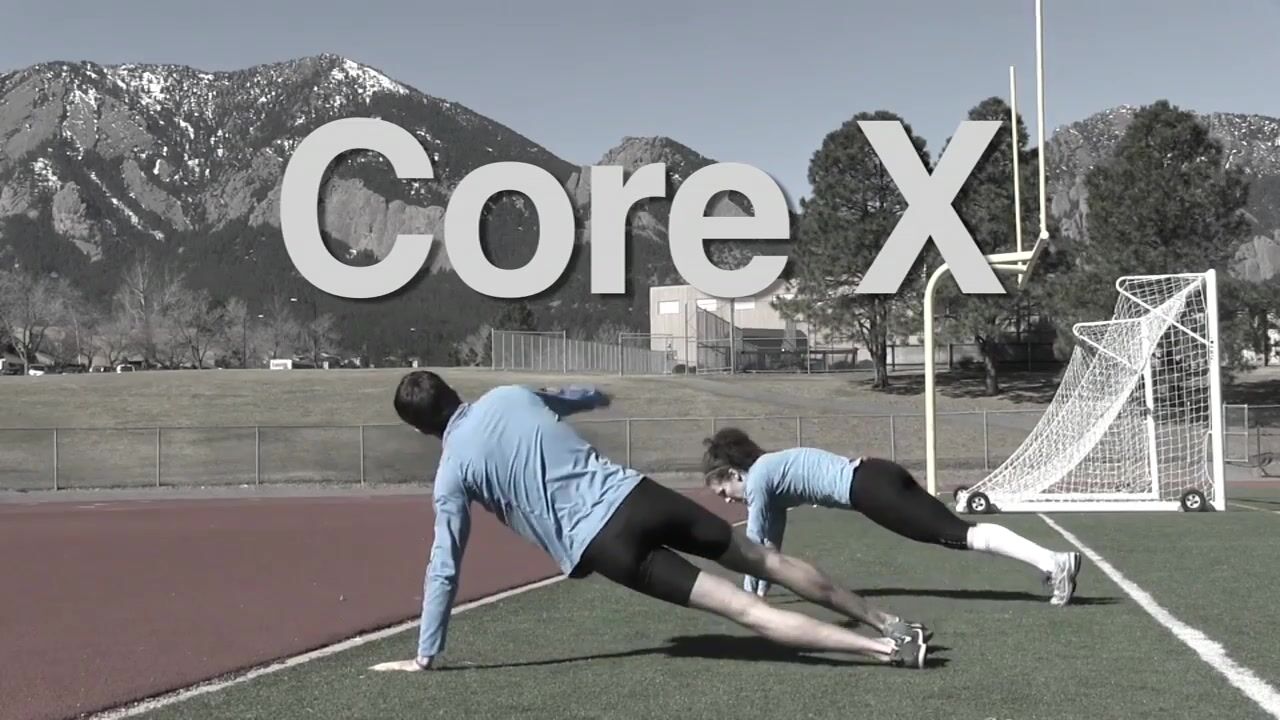
Full written breakdown: Core X: A Core Routine for Runners.
Where the Lunge Matrix Fits Now
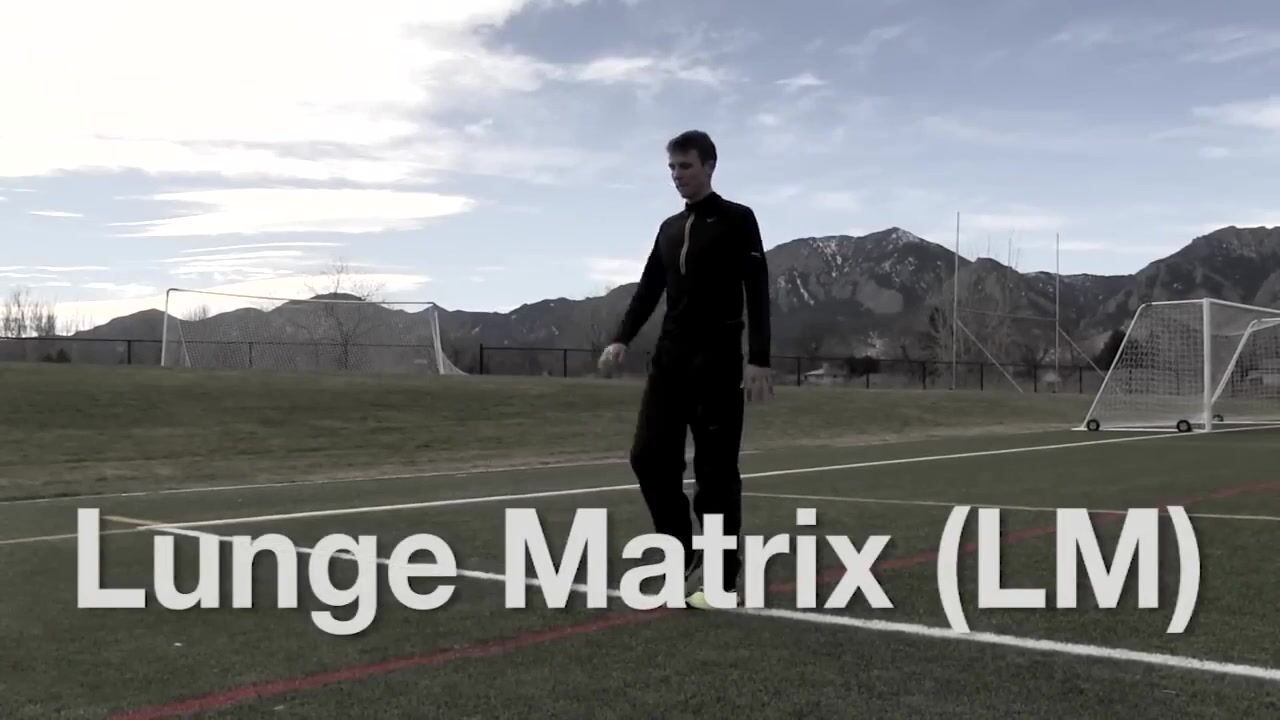
The Lunge Matrix is still useful, but I no longer use it as the main warm-up. It now belongs inside the post-run progression.
That is a meaningful change. For years, many runners used the Lunge Matrix before the run. Today, I prefer Jeff Boele's dynamic warm-up before the run because it covers more of what athletes need at the front of practice: mobility, dynamic flexibility, and sprint mechanics.
The Lunge Matrix still has a place because it moves the hips through multiple planes and asks athletes to be strong in positions running alone does not create. It just lives later in the session now.
What Should Practice Look Like?
A complete high school distance practice has four parts: warm-up, run or workout, strides or fast running where appropriate, and post-run strength work.
The order is simple:
- Start with Jeff Boele's dynamic warm-up.
- Run the easy run, long run, workout, or race-specific session.
- Do strides when they belong in the day.
- Go immediately into the correct Red or Orange post-run routine.
This matches what I teach in the bigger cross-country framework. In The Best High School Cross Country Workouts, I talk about how long runs, fartleks, progression runs, aerobic repeats, and 30-90 fartleks build the aerobic engine. In A Comprehensive Cross Country Training Plan, I explain the full practice structure: warm-up, run, strides, and post-run work.
This article is the post-run piece in more detail.
How Should Coaches Use Post-Run Work on Easy Days and Hard Days?
Use the easy version after easy runs and the hard version after workouts and long runs. That keeps the post-run work aligned with the stress of the day.
On easy days, the routine can do a little more. On hard days, athletes are already tired, so the routine has to be challenging but controlled. The goal is not to turn the post-run routine into a second workout that ruins recovery. The goal is to keep the body strong, coordinated, and resilient inside the training day.
The progression matters. Do not move athletes from Red to Orange just because Orange looks more serious. Move them when they can do Red well. That may take weeks. For younger athletes, it may take most of a season. That is fine. The chassis does not care how impatient the coach is.
Why Do This Work Immediately After the Run?
Doing post-run strength work immediately after the run extends the aerobic stimulus. The athlete's heart rate is still elevated from the run, and the strength work keeps the session going. A 60-minute long run with no break before post-run work can become a longer continuous aerobic training stimulus without adding more running mileage.
This is one of the biggest levers for high school coaches. You can get more training effect from the same amount of running while also strengthening the chassis. That is especially useful for younger runners, middle school runners, and lower-mileage athletes who are not ready for big volume. If you coach younger athletes, this fits naturally with the approach in A Middle School Cross Country Training Plan for Every Environment.
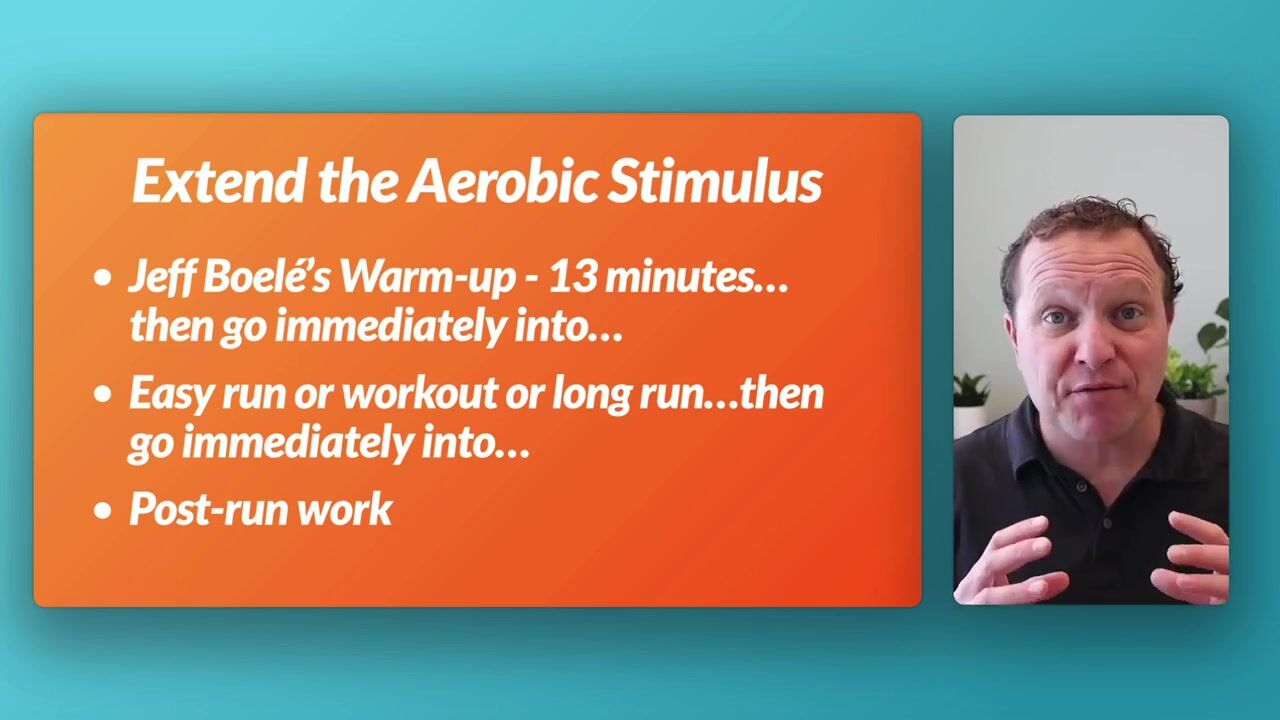
This also explains why post-run work is so important for cross-country runners. In the summer and during the season, when athletes are doing the work from the cross-country workouts article, the post-run routine is part of the day. It is not extra credit.
How Does This Help 800m Runners?
Post-run strength work matters for 800m runners because the 800m still demands a strong aerobic engine, excellent posture, and the ability to run fast while tired. The athlete who cannot stabilize their pelvis late in a cross country race will have the same problem late in an 800m race.
In my article on How To Run The 800m, I explain why athletes have to practice race pace and stay relaxed through the hard middle of the race. The post-run work supports that. Core X, hip strength, and mobility do not replace race-pace training, but they help the athlete hold mechanics when the race gets uncomfortable.
This is why cross country is so valuable for many 800m runners. The aerobic work matters, and the daily post-run work helps them handle the training they need later in track season.
When Are Athletes Ready for the Weight Room?
Athletes are ready for the weight room after they have built a bodyweight foundation. In the language of Consistency Is Key, they need a ton of general strength first. Then they can progress to external load.
Once an athlete gets to Yellow or Green and can move well, the weight room can make sense. But even then, I like Vern Gambetta's idea of the weight room without walls. If I were coaching high school right now, I would have medicine balls, a kettlebell or two, hurdles, and a plan. You can do a lot of good work at the track without turning distance runners loose in a weight room they are not ready for.
The order matters: bodyweight first, light external load second, heavier external load later. Months and years, not days and weeks.
Common Mistakes Coaches Make With Post-Run Strength Work
The first mistake is treating strength work as optional. It is not optional. It is what lets the athlete tolerate the running.
The second mistake is assigning it as homework. If the routine happens after athletes get home, it will not happen consistently. Put it into practice.
The third mistake is skipping ahead. Start with Red. Own Red before Orange. Clean movement is the progression gate.
The fourth mistake is starting too big. You do not need thirty minutes. You need a few minutes done well after every run. A short routine athletes complete is better than a long routine they avoid.
The fifth mistake is separating it from the training philosophy. Post-run work is not just injury prevention. It also builds the athlete's attention span for hard work, reinforces consistency, and helps the whole practice become one coherent session.
Where Should a Coach Start This Week?
Start with Red. Use Red Easy after easy runs and Red Hard after workouts or long runs. Put the work at the end of practice, on the grass or turf, with no long break after the run.
Have athletes follow the free page until the routine is automatic: coachjayjohnson.com/post-run.
Do not worry about Yellow and Green yet. Do not worry about the weight room yet. Do not worry about building a perfect system in one week. Get the habit right first. The team runs, and then the team does the post-run work.
If you want this built into a complete season, that is what the XC Training System is for. But you do not need to buy anything to start. Red and Orange are free, and they are enough for most teams to build the habit this season.
Frequently Asked Questions
What should high school runners do after a run?
High school runners should do a short post-run strength and mobility routine immediately after the run. The routine should include bodyweight work for the core, hips, feet, and lower legs. Coach Jay Johnson recommends starting with the free Red progression at coachjayjohnson.com/post-run.
Should runners stretch after running?
Static stretching after running is not the best first priority for high school runners. A progressive post-run strength routine is more useful because it addresses the weak hips, unstable core, and undertrained chassis that contribute to many running injuries. Athletes can still stretch later if they want, but the post-run strength work should come first.
How often should high school runners do post-run strength work?
High school runners should do post-run strength work after every run. The version changes based on the day: easy-day routines after easy runs, hard-day routines after workouts and long runs. The habit stays the same.
When should runners move from Red to Orange?
Runners should move from Red to Orange only after they can do the Red routines with clean, controlled form. Talent, age, and race times do not determine progression. Movement quality does.
Is Core X part of post-run strength work?
Yes. Core X is part of the post-run strength system. It is a short, simple core routine that helps runners build the stabilization they need to hold posture late in races and workouts.
Is this only for cross-country runners?
No. Post-run strength work is especially important for cross-country runners because they are building the aerobic engine all summer and fall, but it also matters for 800m runners, milers, track athletes, and adult distance runners. Any runner building fitness needs a chassis strong enough to support it.
Build the Engine and the Chassis Together
Running builds the engine. Post-run strength work strengthens the chassis. Sleep finishes the building.
Be honest with your athletes. If they skip the strength work, they are asking their aerobic engine to live inside a weak frame. Some will get away with it for a while. Many will not.
You do not need to add an hour to practice. You need to add a few minutes athletes actually do. Start with Red. Keep it at practice. Go straight into it after the run. Let the habit compound.
What would change for your program if fewer athletes lost weeks or seasons to preventable injuries? Start at the end of today's practice.
---
Jay is also the founder of Next Mile Recruiting. Next Mile is not a recruiting service. It is an educational company that gives families clarity on the college recruiting process so they can make a great decision about where their athlete runs in college. If you coach high school runners, this is the resource you can hand their parents.
Learn more about Next Mile Recruiting here: nextmilerecruiting.com.